Adélie penguin
Pygoscelis adeliae
Copy isn’t available in this browser. You can share the address from your browser’s address bar.
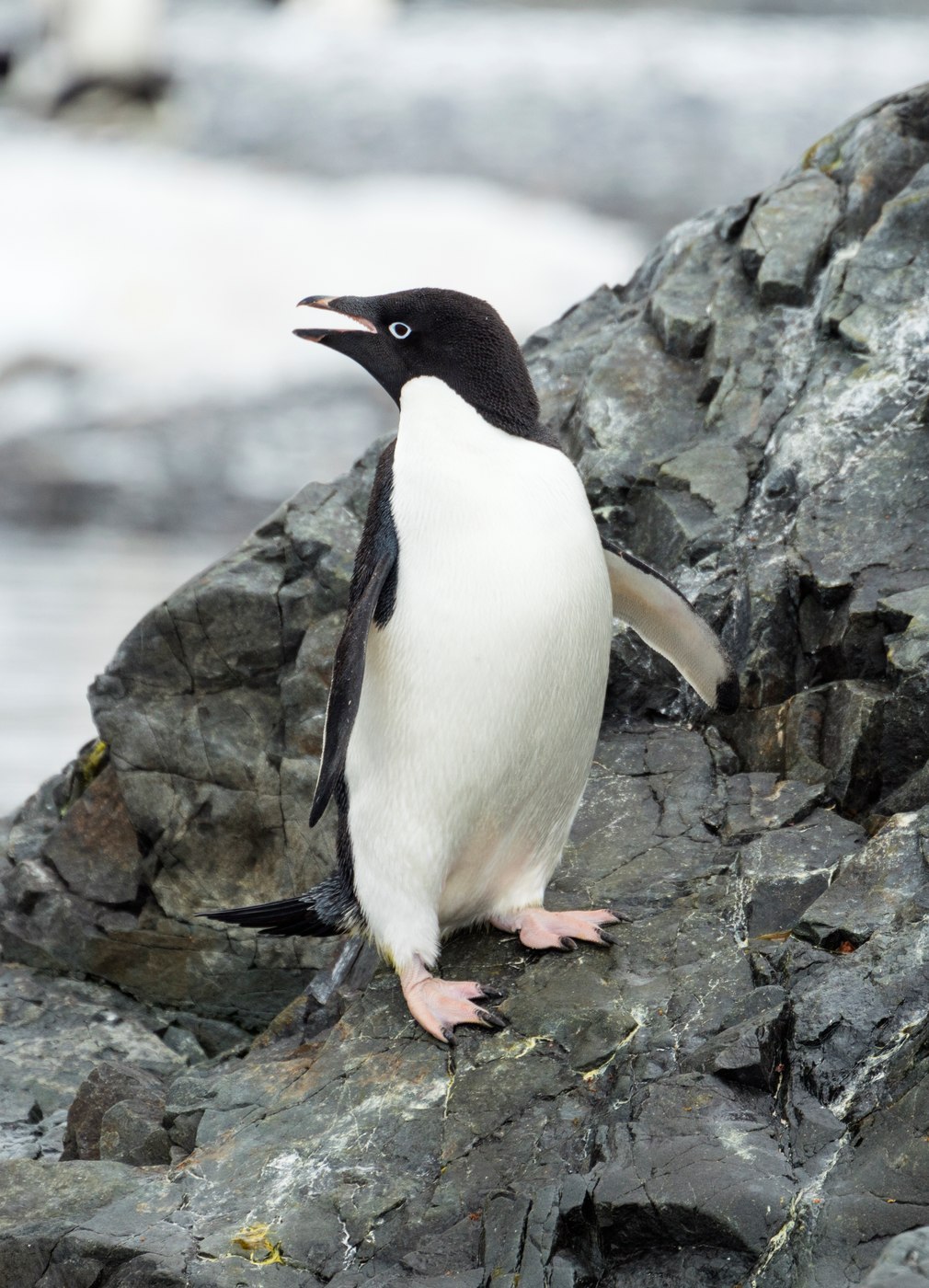
A little black-and-white explorer with a distinctive white ring around each eye.
Overview & identification
Adélie penguins breed around the Antarctic coast on exposed, ice-free rock. Their neat white eye rings make them easy to recognize. Adults build pebble nests and share the work of incubating eggs and feeding chicks. Sea ice and access to productive feeding grounds shape their lives.
Habitat & life at sea
This species is associated with Antarctic coast. Although penguins come ashore to breed and replace their feathers, they depend on the sea for food. Their wings are adapted as flippers, moving them through the water, while their feet and tail help them steer. The boundary between safe breeding ground and accessible feeding water is a vital part of their habitat.
Diet & adaptations
The diet includes krill & fish. Food availability changes with the season and ocean conditions, so feeding trips can vary in distance and duration. A streamlined body, closely overlapping feathers, and an insulating layer of fat help penguins move and stay warm in the water. Like other seabirds, penguins also have specialized glands that help remove excess salt.
Conservation & responsible observation
Penguins depend on connected land and ocean habitats. Changes in prey availability, disturbance at nest sites, pollution, and fisheries can affect them in different ways. Follow local wildlife guidance, keep a respectful distance, never block a route between the colony and the sea, and leave feeding and nesting birds undisturbed. Conservation assessments change over time; consult the linked references for current information.
Sources & further reading
This is an introductory guide. Follow these references for research, detailed species information, and current assessments.
Adélie penguin — Wikipedia and cited references ↗ Penguins — Australian Antarctic Program ↗