Built for the water
Copy isn’t available in this browser. You can share the address from your browser’s address bar.
Why a bird that cannot fly is such an extraordinary swimmer.
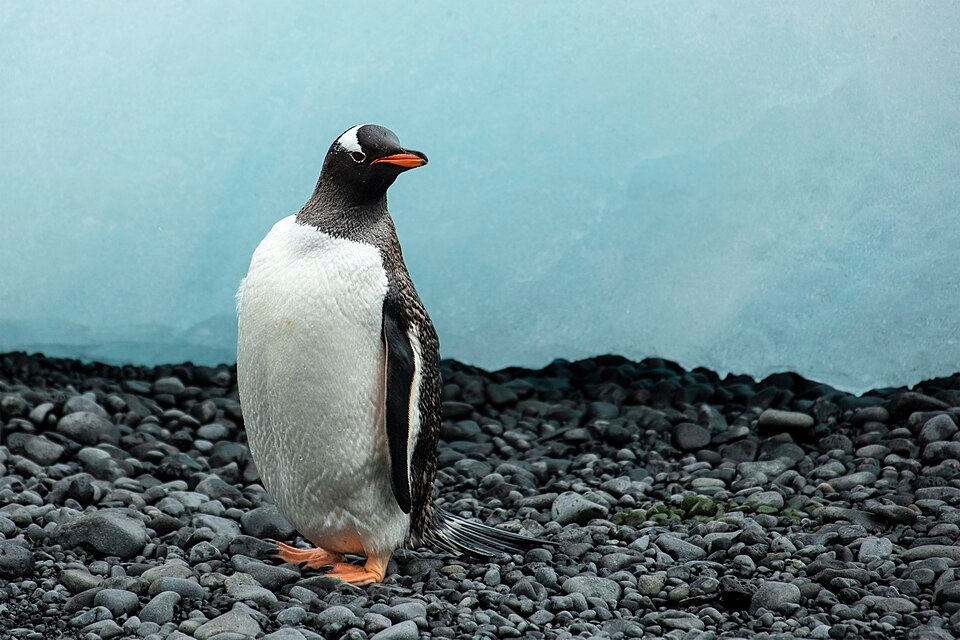
Wings that became flippers
Penguins are birds, but their wings are adapted for swimming rather than flying. Stiff, flattened flippers provide propulsion underwater. A streamlined body reduces drag, while the feet and tail help with steering. On land, the same body plan produces their familiar upright posture.
A coat for cold water
Closely overlapping feathers form a protective outer covering. Penguins maintain their feathers by preening, and insulation comes from their plumage and a layer of body fat. Not every penguin lives in extreme cold, so managing heat is also important for species on warm coasts.
Breathing, diving, and feeding
A penguin breathes air before a dive and then holds its breath while hunting underwater. Diving ability varies greatly between species. Emperor penguins can reach depths of more than 500 meters, while other penguins often search for food much closer to the surface.
A necessary change of feathers
Penguins replace their feathers during a molt. Because their waterproof covering is being renewed, they must remain out of the water during this period. Building up energy reserves before molting helps them get through the time away from feeding.
Sources & further reading
This is an introductory guide. Follow these references for research, detailed species information, and current assessments.
Penguin adaptations — Australian Antarctic Program ↗ Emperor diving and feeding — Australian Antarctic Program ↗