Life in a penguin colony
Copy isn’t available in this browser. You can share the address from your browser’s address bar.
Pebble nests, familiar voices, and the art of raising a chick.
A busy neighborhood
Many penguins gather in colonies to breed. Some colonies contain a great many birds, while others are small and scattered. Yellow-eyed penguins are a useful exception: pairs often nest out of sight of one another. A colony is a place for courtship, egg incubation, and the demanding work of feeding growing chicks.
Partners and parents
In many species, parents share incubation and feeding duties, taking turns between the nest and the sea. Emperor penguins have a different early arrangement: the male incubates the egg while the female goes to sea. King and emperor penguins hold their eggs on their feet rather than building a conventional nest.
Finding a familiar voice
Sound plays an important role in penguin life. Calls help adults recognize partners and chicks among many neighboring birds. Visual displays and posture also help birds communicate. The details differ by species, but a colony is far from a silent gathering.
The pebble problem
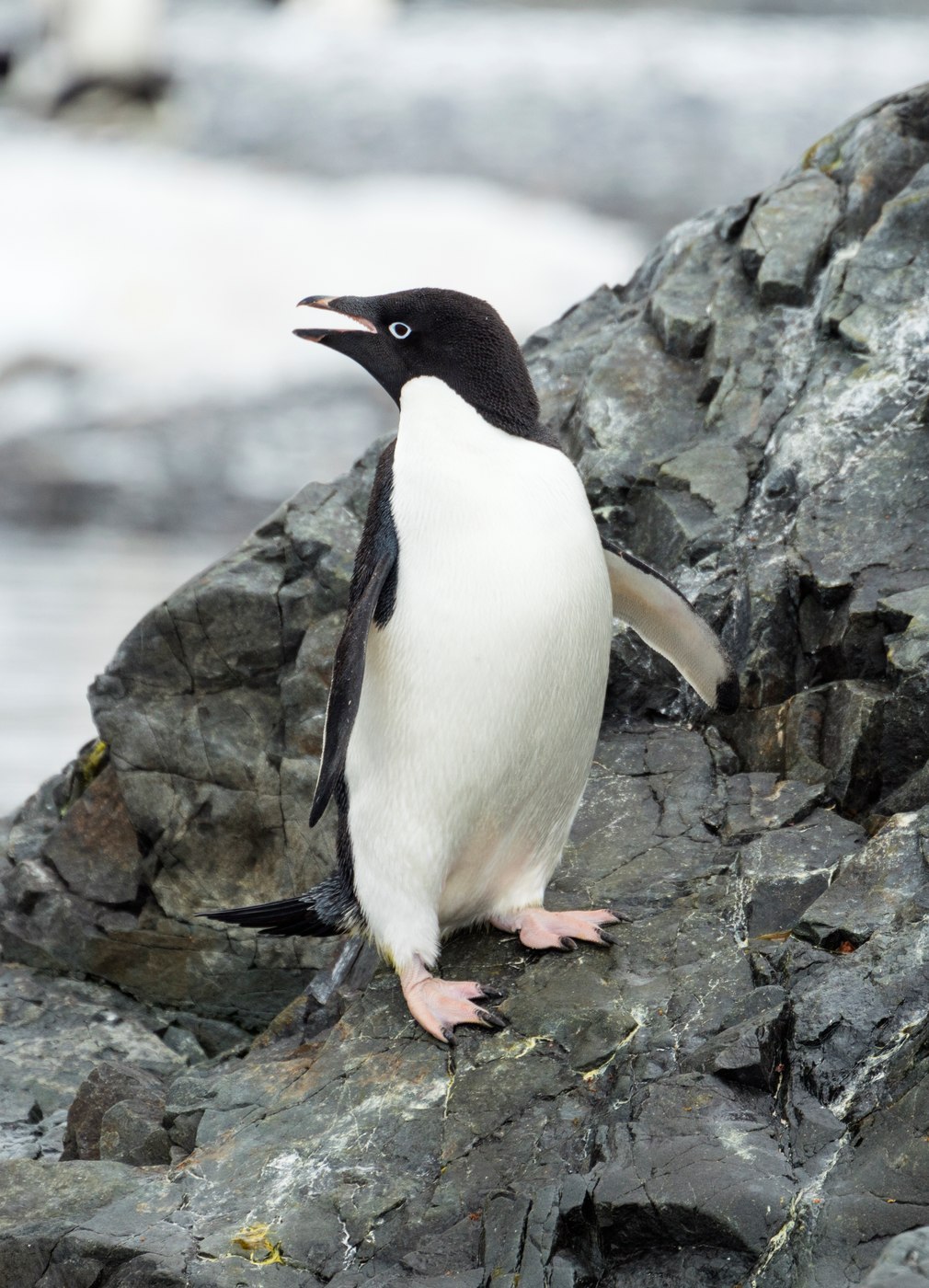
Adélie penguins build nests from stones. These can lift eggs above wet ground and melting snow. Stones are valuable nest material, and birds sometimes take them from neighboring nests. Nest structure and weather can both influence breeding success.
Sources & further reading
This is an introductory guide. Follow these references for research, detailed species information, and current assessments.
Adélie penguin — Australian Antarctic Program ↗ Emperor penguin — Australian Antarctic Program ↗